
Serving Eastern Pennsylvania, Central and Southern New Jersey, and Delaware
Serving Eastern Pennsylvania, Central and Southern New Jersey, and Delaware
While sheltering-in-place we’ve been spending a lot more time baking. And wouldn’t you know: Stressed Spelled Backwards is: Desserts!

I saw that catchy phrase after delivering my 5th batch of muffins in April. To avoid gaining the dreaded Covid-15 (think Freshman-15) I delivered Tupperwares to my neighbor, who appreciates my zero-sugar recipes.
With my last delivery of cranberry-sweetened pumpkin millet muffins, I wrote “sorry for dumping my stress-baked goodies on your doorstep.” She texted back “TY” with a link to “Stress-baking is a real thing!”
My 3 favorite therapeutic benefits to baking:
This “proof of progress” is where I want to focus.
I don’t know about you, but I am:
• losing a sense of what day it is
• not as productive as I was before Covid-19
• feeling less accomplished despite feeling almost as busy
So I reflected on the tools I used before Covid-19:
Here’s why I’m returning to these habits:
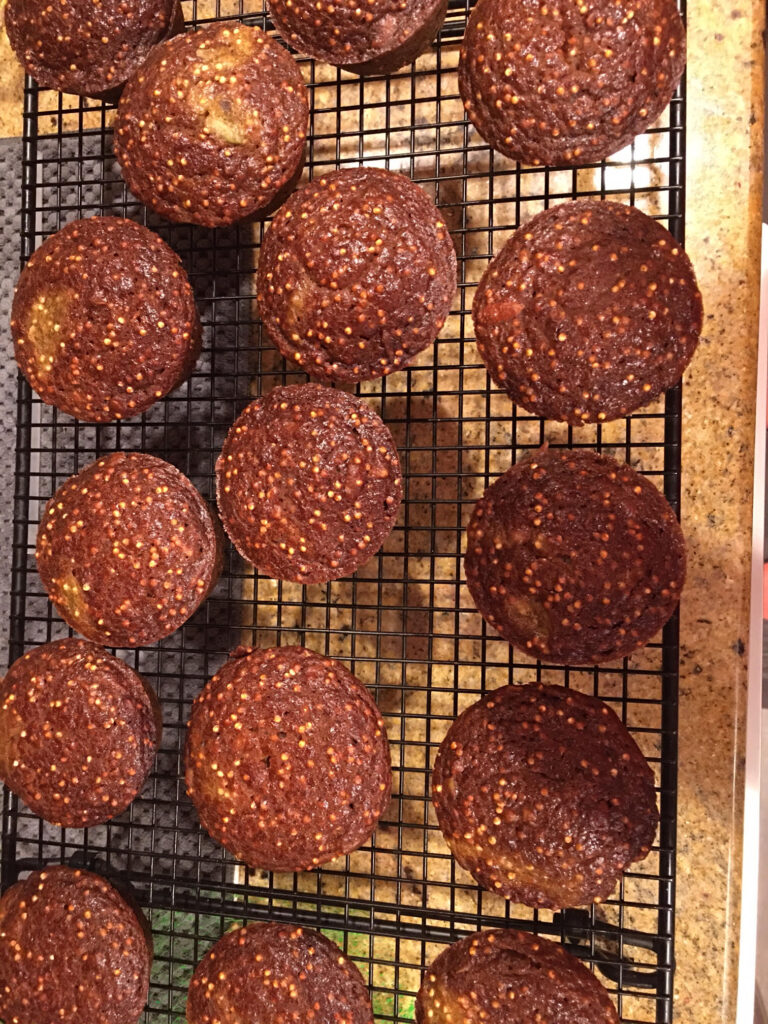
I can’t take credit for figuring out…stressed spelled backwards is desserts!
A recent RieOrganize! poll on Facebook came up with the following: Stay at home. Boredom. Facebook. Zoom meetings. Gratitude for front line workers. Frustration about having to wear a mask. Death. Telecommuting. Homeschooling. Social isolation.
Until recently, I knew of only a handful of friends who were dealing with COVID-19. Most were friends who live out of town or who were dealing with their friends/family members who were dealing with the virus. Yesterday, I was told that a friend is in the ICU with novel coronavirus. While we were not close friends, we did keep in touch over the 30+ years that I’ve known him and his husband.
What I realized today, however, was how much I did not know about them. For instance, who is my friend’s next of kin? My immediate answer would be, of course, his husband. But his husband died last week of a non-coronavirus-related illness. I don’t know if he has a health care directive or, if he does, who is listed as the alternate proxy because his husband just died – or where this document is located. I know that his husband took care of most of their financial, legal and daily responsibilities. I don’t know who will be responsible for all of that now and, more importantly, nor does anyone else. Everyone is scrambling to try to figure out what to do!
While this is indeed stressful and sad, I have to ask myself and you…
· How many of us or our friends or family members could find themselves in a similar situation?
· Have we taken care of our own medical, legal and financial paperwork? If we have, does anyone know where it is located or have easy access to it?
· Will you or someone you know find themselves sick or dying alone with no one who knows what you would want to happen medically or, if you should die, with your belongings?
According to our informal Facebook poll, not everything in our world today is discouraging, heartbreaking, disheartening or grim. Looking at some of the memes on Facebook or Instagram can make you smile or laugh out loud.
There is little wrong with cooking or baking too much, using Zoom or Facetime to be connected to friends, relatives and colleagues, binge watching Netflix or taking naps. There is much kindness, laughter and sharing. Neighbors are helping neighbors.
This can be a time of transformation – interpersonally, socially, economically and globally. It can be a time to focus on the people and things that are important in our lives.
And this is where we all come in to transform our world into a better place in which to live. Thinking about medical and financial preparedness is not high on most people’s lists of things they want to do, but, especially during this time, it is essential.
First, we should examine our own paperwork. How prepared are we? Then, we should take a look at our contact lists. Who do we know who may need help?
Few people want to talk about the possibility of being sick or dying. In this age of COVID-19, it is imperative that we do so and that we talk with those whom we love and help them to prepare as well.
This is something that cannot wait. Please take steps to ensure that someone will know what you want to happen if you are unable to speak for yourself.
Stay well, stay safe and stay home… and if you are one of the many who must go to work to keep us safe, healthy, fed, informed or otherwise (relatively) sane, thank you.
First and foremost, our thoughts and prayers are with those who have contracted this virus. We wish you a speedy recovery. For the rest of us, we face several weeks of home confinement. I don’t know about you but when I stay home for longer than one day, I tend to become lethargic and unmotivated. This time I’m determined not to let that happen. Here’s my plan of action:
As we head into a new month, continued stay-at-home living in most states, with the kids out of school, and a large percentage of the workforce working from home, most of us are starting to wonder just how much longer we can survive through this pandemic. This downtime has been a blessing for some and a curse for others, and right about now, I bet most of you are struggling with staying busy, maintaining a routine and downplaying anxiety. If you have kids, you might be pulling your hair out amidst boredom, complaining and fights. In my house, we have had high highs and low lows. We have moved almost daily from amazing family moments of laughter and warmth to stressful bouts of fighting and discontent. This rollercoaster might look a bit different for each family, but I think there are some things we can do right now to combat the negatives and approach each new day with a sense of accomplishment and hope. None of this is new, but I know that I personally enjoy the timing of a good reminder when I need it the most.
The main thing that I have been working on lately is to be intentional and own my perspective. We all get bad thoughts occasionally, and with the scary things that the media is sharing, it’s no surprise that most of us are being hit with thoughts of worry, anxiety, and fear. It’s human to feel these things, and we shouldn’t necessarily fight them off when they show up. They are sometimes there to warn us against a real danger or protect us from something that might be about to happen. On the flip side, they can also be brought about or intensified by our imaginations or fears, generated from negative experiences in our past. Owning your perspective involves allowing all thoughts to enter and float by, analyzing them to obtain any useful information as they move, and letting them continue their journey out of your brain. Follow up with a positive affirmation, take a step forward anyway, and change the dynamic. The key for me has been to let the thoughts go. Don’t hold onto them, don’t brew over them, and don’t go to bed at night thinking about them. Instead, read a good book, listen to a motivational podcast, pray with intention, or call up a friend or family member to talk about something else. Simply dismissing a thought can feel easier said than done, but I have found that the magic is just as simple as distracting yourself and replacing the thought.
For the first few weeks after the schools closed, my family and I were all sick, so our lives resembled something like those of a pack of wild dogs, scrounging for food and doing whatever needed to stay alive. I joke, but it felt a bit like complete chaos. As we are healing, we are picking up the pieces, getting the laundry done and assessing the inventory of our pantry. Now is the time to reassess the state of your own household and determine things like what supplies are needed, how schedules will change, and who will be responsible for required household tasks. Reinventing and implementing a routine is key for feeling like you have some control over your situation. If you use a family command center or large calendar, erase the scheduled soccer practices and instead schedule a time for things like school or professional work, exercise, chores and free time.
As you acclimate to your family’s new routine, don’t forget to relax and give yourself some grace in this process. Most of us have never lived through a pandemic like this, and it has literally upheaved our lives in a matter of weeks. Most of us have never been trained to navigate in this time, and we are all in the process of figuring things out as we go. If the dishes are dirty and the laundry is piled up, it’s okay. If the kids are not yet in a home school routine, they will survive. If you are using tissues because the toilet paper ran out, everyone will still be fine. Take a deep breath and remember that you are smart, capable and blessed. If a routine or schedule doesn’t work out as you envisioned, change it. The sky will not fall, and you WILL go on to live another day.
I certainly don’t claim to be a therapist or guru in the art of living, but I can confidently claim the title of a real wife, mom, neighbor and professional who is also learning to navigate this strange time right alongside the rest of you. I am finding that readjusting my perspective to focus on the positive, continuing forward momentum, resuming a routine for my family, and giving myself the grace to show up in whatever capacity that I can bring to each day is helping to make great, slightly sweetened lemonade out of this batch of sour, slightly bruised up lemons lying in front of us.

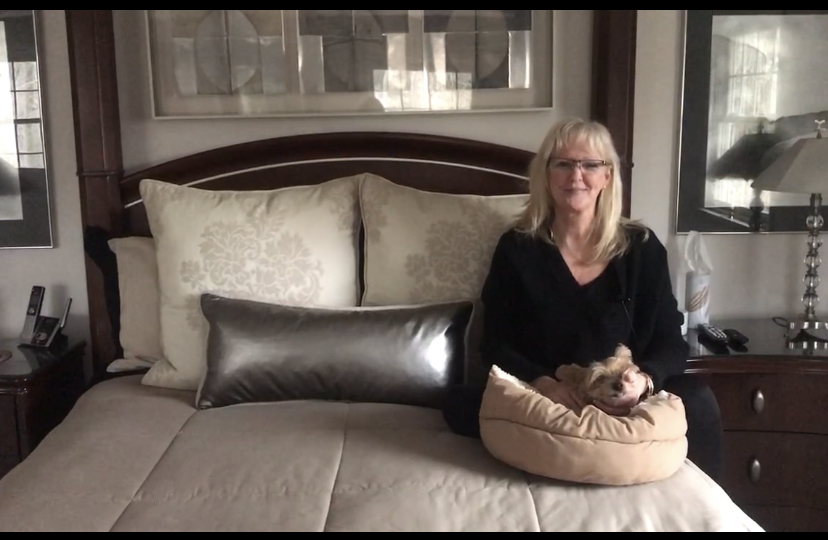
I remember when my mother used to nag me to make my bed. I remember her saying, “you can go when your bed is made.” I would come up with a hundred reasons why it was a pointless task but perhaps there was a method to her motherly madness.
We spend approximately one-third of our lives in our bedrooms. And, it has been proven that the appearance of our bedroom has an overall affect on our mood and our productivity.
Our bed is the most dominant feature in our room. A made bed creates a positive vibe and immediately gives us a feeling of accomplishment. According to the National Sleep Foundation survey, a made bed also contributes to healthier sleep habits and better rest. In addition to increased productivity, bed makers also enjoy lower stress levels, improved moods and tidier homes.
Admiral William McRaven spoke about the transformative power of the daily bed making habit at the University of Texas commencement in 2014. It has since gone viral with over 10 million views and has been referred to by some of the worlds best thought leaders. He states “If you want to make a difference in the world, start by making your bed.” He said in part, “if you make your bed every morning, you will have accomplished the first task of the day. It will give you a small sense of pride and will encourage you to do another task and another and another. By the end of the day, that one task completed will have turned into many tasks completed. Making our bed will also reinforce the fact that little things in life matter.” I just love this: https://www.youtube.com/watch?v=jflUvxQLkgs
Since his commencement speech, Admiral McRaven published Make Your Bed: Little
Things That Can Change Your Life…And Maybe the World , a
#1 New York Times Bestseller.
Thanks mom, I suppose you had a point. Having an organized living space makes all the difference. I make my bed ever morning…and this small task has made the rest of my day feel infinitely more together.
I hope you will agree!
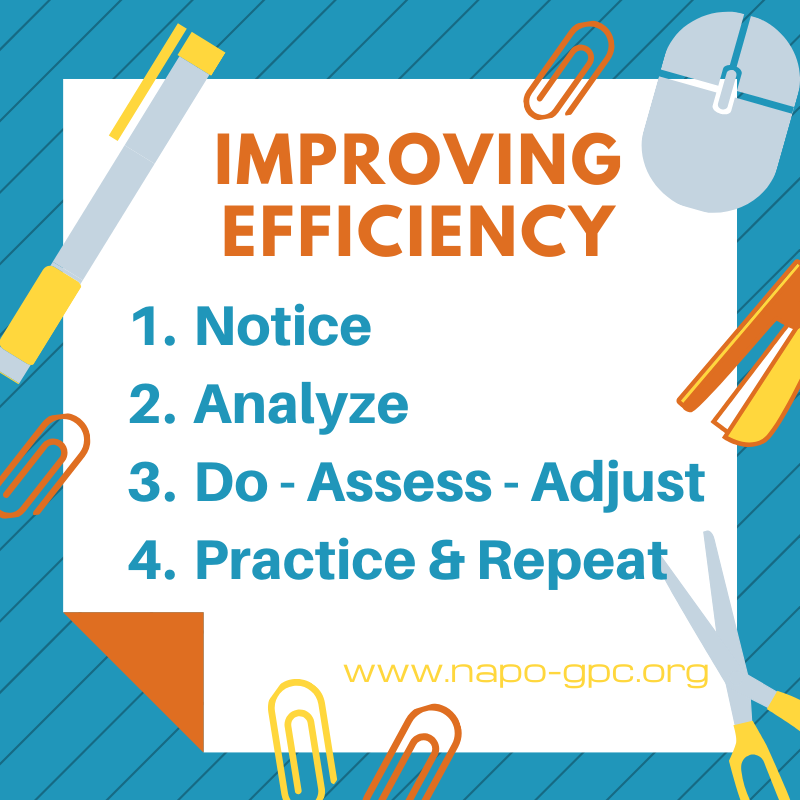
When I think of reducing inefficiencies I think of when I was in college and learned about the time and motion studies of the 1950’s. I envision Lucy and Ethel wrapping chocolate on the production line. And then I think that no one wants to live life with so much constraint that we are more machine than human. However, so many of my clients tell me they want to be more efficient.
I am a big fan of putting rote tasks on autopilot so that our energy can be put towards creative process and enjoying life. I am embarrassed to tell you this (but will because perhaps it might help) but I’m always looking at how to do things in the fewest steps.
I will exemplify this with a task we all do – emptying the dishwasher. I’ve observed many people empty the dishwasher – I do it differently. And I typically get it done in the time it takes to brew 2 or 3 cups of Keurig coffee.
I waste not a moment on something as routine as unloading a dishwasher.
I’ve blogged about all of this and I’ve linked the above questions to those posts. What I’m addressing here however is how to create systems and processes to be most efficient, streamlined, and effective.
Sometimes having a productivity coach or organizing consultant helps. We work with our clients to help them develop the best ways to improve efficiency.


