Serving Eastern Pennsylvania, Central and Southern New Jersey, and Delaware
Serving Eastern Pennsylvania, Central and Southern New Jersey, and Delaware
 Dear Husband,
You know I love you very much. You know I want us and our family to be happy. I treasure you in my life, and I want us to always be able to work out our differences and support each other.
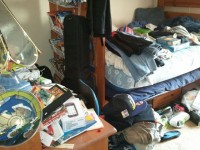
Unfortunately, we always seem to have the same disagreement over clutter. You are very lucky to know how to organize and to keep everything organized. I, on the other hand, struggle with this daily. Sometimes, it becomes totally overwhelming, and I don’t even know where to begin. I know you have my best interests at heart when you say you will help me, but regrettably, we end up fighting and getting nothing done.
I have tried for years to do this on my own, and I know you think I should be able to do so. As you can see, I have not been very successful at this. This is not a reflection on you, and I am hoping you will understand that I need help. It is very hard for me to admit this, but I’ve decided the time has finally come for me to ask for help from a professional organizer. The professional organizer will:
Believe me, I love every gift you have given me through the years, but the one gift I would love is for you to support me in my need for organizing help. Thank you SO much.
Love you always,
Wife
_____
The letter you just read is very real. It is from the heart and expresses a real need, and a real struggle. While this example is from a wife to her husband, husbands can explain to their wives, parents to their children, a child to their parent.
We all need help with things in our lives. Professional organizers can offer the assistance needed in this area. It doesn’t matter the size of the project. What matters is that you’ve heard what the person is saying to you. For example, a nurse practitioner client of mine is very overwhelmed with the disorganization in her home. In fact, she has taken naps after our sessions. I explained to her that removing a splinter for me is like having major surgery. Of course, I know that it isn’t, but to her, removing a splinter is nothing, but for me, it is more than nothing.
What can you do to listen to and honor your spouse’s, partner’s, parent’s, child’s, friend’s, etc. request?
Click on the title above to learn more about the featured author.
 Are you in need of a new beginning? The New Year resolutions have faded into the holiday glow, and now is a great time to renew and refresh your home, your space, your life. The best way to begin anew is to plan with intention. According to Deepak Chopra, M.D., Intention is the starting point of every dream. It is the creative power that fulfills all of our needs, whether for money, relationships, spiritual awakening, or love.
Intentions are the bedrock of goals and desires. When planning with intention, you want to come from a place of authenticity. Ask yourself what you genuinely want to achieve. For your intentions to take form, it’s important to set goals.
Goals should be specific and measurable for them to be powerful and effective. That doesn’t mean that your goals must come from a place of stress and guilt, be competitive or full of pressure. Setting measurable goals gives you the clarity that is needed to help manifest tangible outcomes.
Actions support your goals and intentions allow the goals to take form. Creating daily, weekly, and monthly actions is key to achievement and may involve building or changing some habits. Habits require practice to establish or break, and the cessation of action is more about the loss of support and accountability than failure or weakness.
Sometimes we all fall short of our goals. This is when a shift in perspective can help us overcome feelings of defeat. Be kind to yourself, practice focusing on what you have accomplished and allow yourself to make mistakes. Enjoy the process and have fun along the journey.
Click on the title above to learn more about the featured author.
 Ever heard of the 80/20 rule? An Italian economist, Vilfredo Pareto, first talked about it roughly 100 years ago, when he observed that 80% of Italy’s wealth was in the hands of 20% of the population. Since then, the “Pareto Principle” has been found to have widespread applicability: in most situations, 80% of the benefits come from 20% of the causes.
There are many everyday examples of the 80/20 Rule.
The Pareto Principle is enlightening to me when I apply it to my clients’ complicated relationship with paper.
I think Pareto was onto something here. Could it be that in any stack of ten papers, roughly two of them are truly valuable? Could we train ourselves to zero in on those vital two and let the other eight go without agony or regret? What do you think?
Still struggling? Professional organizers are compassionate helpers skilled at guiding their clients to zero in on that valuable 20% worth keeping, whether it’s paper, household clutter, or excessive time commitments. Use the Find An Organizer feature on this web site to locate an organizer near you.
Click on the title above to learn more about the featured author.
 Our new clients often tell us they feel overwhelmed by their clutter and don’t know where to begin. Starting someplace – anyplace – is the best option. Take baby steps and focus on what you’ve accomplished rather than what yet has to be done.
There is no “right place” to start, as we are all different. Select an area that doesn’t intimidate you. Your initial objective is to get the momentum going!
Here are some tips to help you start the process:
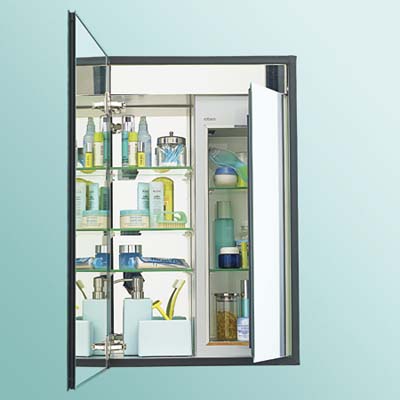
Start small – Your medicine cabinet is a great place to begin. Many items have expiration dates so those decisions are easy to make. The space is small, so the project may take only 20 minutes. As an added benefit, if you begin to feel overwhelmed when you tackle other projects, you can go back to the cabinet and re-experience the joy of being organized.
Start with a hotspot – Often, there is an area of your home that drives you crazy. For example, the unopened mail has piled up on the kitchen counter and is sliding toward to stove… or you haven’t seen the top of your dining room table in years, and company is coming. You are highly motivated to get the “monkey off your back” to regain a sense of order. Remove what doesn’t belong in the space and sort similar items together into containers as you go.
Start with what you haven’t used in years – Has your spare room become a dumping ground? This might be an easy place for you to start because you know for a fact that much of the contents hasn’t been used in years… or decades!
Once you’ve made the decision on where to begin, here are some tips to ease the process:
Limit your decluttering time – Don’t bite off more than you can chew in one session. Decision making can be draining, so determine the amount of time that works with your energy – two, three or four hours.
Make appointments with yourself – It’s easy to have good intentions but harder to do the actual work. Dedicate time to declutter by noting it on your calendar. Chances are better that you’ll keep the appointment. How does three hours every other Saturday morning sound to you?
Be kind to yourself – There is often shame associated with clutter. It took you years to accumulate, and it won’t disappear in one session. Don’t judge yourself. Keep your focus on your goal of finding what you need quickly and having a space that is harmonious and energizing.
Let us know how you start – we’d love to hear about it!
Click on the title above to learn more about the featured author.
 When I read this headline, I had to smile: The Green Pope: Francis is putting the full weight of the papacy behind efforts to curb climate change. Many Professional Organizers base their businesses on being ‘green,’ recycling, and simplifying the homes and lives their clients lead. After being glued to the television for the Pope’s entire visit to the United States (I was painting my bedroom at the same time), I couldn’t help but see a connection between this incredible man and some of the same ideals that relate to the environment and the business of professional organizing. After the Pope’s visit, I did some research, and two documents written by the Pope stood out.
The first document was published on June 18, 2015, when Pope Francis released the encyclical Laudato Si: On Care of Our Common Home. In this document the Pope calls on all nations and peoples to address urgent environmental concerns, including climate change. Francis reported that this encyclical was not really an environmental document; rather, it highlighted the developed world’s indifference to the destruction of the planet while pursuing short-term economic gains. The Pope states, “Never have we so hurt and mistreated our common home as we have in the last two hundred years.” Professional Organizers work with clients every day to set up home recycling centers, and the significance of that labor isn’t lost on us; we are helping our clients save the planet one household at a time.
The second document released by the Pope was The 15 Diseases of the Curia. The Curia Romana is the papal court, or the people who assist the Pope in the government and administration of the church. Pope Francis explains that these ‘diseases’ do not only concern the Curia “but are naturally a danger to every Christian, every curia, community, congregation, parish and ecclesiastic movement.” Number 13 on the list is the disease of Hoarding. In layman’s terms, a person tries to fill an existential void by accumulating materials goods, not out of need but only in order to feel secure and, as a result, burdens the soul. As a nation, we see this every day as shopping has become the national pastime, and anyone can accumulate goods 24/7 by using the internet and television. When people become overwhelmed with clutter and don’t know where to turn, very often it is the Professional Organizer who gets the call for help.
Finally, my hope is that no matter what our religious preference, we all take the words of Pope Francis to heart and be responsible stewards of our planet– our first home.
Clutter Quote: “Creation is not a property, which we can rule over at will; or, even less, is the property of only a few: Creation is a gift, it is a wonderful gift that God has given us, so that we care for it and we use it for the benefit of all, always with great respect and gratitude.” Pope Francis
 If you come to my house, you won’t see a perfect, magazine-ready home. But you will see a clutter-free, tidy space, unless the kiddos are having a LEGO-fest. Then all bets are off.
Want a more clutter-free home all the time? Take note of things that organized people do to keep their home organized.
While there are many more things that organized people do, these 6 things that organized people do might help you to stay more on track in your own home.


