
Serving Eastern Pennsylvania, Central and Southern New Jersey, and Delaware
Serving Eastern Pennsylvania, Central and Southern New Jersey, and Delaware
 Brrrr…it’s cold in most of the country. We spend more time indoors. What’s your favorite indoor activity? I bet reading immediately sprang to mind!
Is your book collection organized so you can find just the right book you’re in the mood to read? Excellent! Or like many folks, are books scattered around the house? Do you even know what books you have? Do you regularly purge unwanted books or let them continue to occupy valuable space and collect dust?
Now is a great time to organize your books. Here are 11 tips.
My largest book organizing project was 17 years ago with my first client. In his library he had between 1,000 and 2,000 books. They were out of order. There were duplicates and triplicates. His library was completely nonfunctional. It took time, but after donating many of them and organizing the rest according to my client’s preferences, that massive job got done. My client was thrilled to have a functional library that looked great too!
For my personal collection, I mix it up. Fiction books are arranged in alphabetical order by author’s last name. Books in other categories (such as organizing, business and design) are separated by category but not in any order. Some books are vertical. Some are horizontal. Small framed photos and pieces of art add to the overall look. I donate books that no longer interest me. My book collection is functional and attractive. With a little time and effort, yours can be too.
Downsizing and organizing your books is worth doing. Then, when planning your next vacation, you can quickly grab the ones you want to read – much better than wasting time searching around the house or wasting money buying more at the airport.
Click on the above title to learn more about the featured author.
 Tips for getting your home ready for
OPEN HOUSE!
After the holiday rush is over and you’ve carefully packed your holiday decorations away, you may want to prepare now for spring. Spring, of course, is the perfect time to put your home up for sale.
Here are 5 tips to get your home ready that are often overlooked:
 Clean & update your trash cans and re-cycling center. This area is often neglected and you don’t want any unwanted odors lingering in the home. Recycling should be neat and handy. Take cans out on time and rinse the cans out as soon as the hoses go back outside.
 Get everything off the floor. Show off the square footage of your home by clearing all floors. That means: cases of water, magazines, shoes, pillows, toys, worn out rugs, and storage bins. Pick everything up off the floor. Mop and sweep often.
 Let the sunshine in by scrubbing your windows inside and out, remove heavy drapes, old shades and anything that is in the way of the windows. Natural light makes a home feel warm and cozy. If you must have window treatments, choose white.
 Have your bathroom and kitchen professionally cleaned. If a buyer sees dirt and mildew in these areas they will think that there is more throughout the house. Choose white whenever possible in these two areas. Add bright light bulbs, too.
Begin packing your valuables now. Neatly packed boxes in a storage area are perfectly fine when showing your home. Be sure to pack and store items with special meaning such as momentos and expensive items. Lighten up on the framed photos of your families.
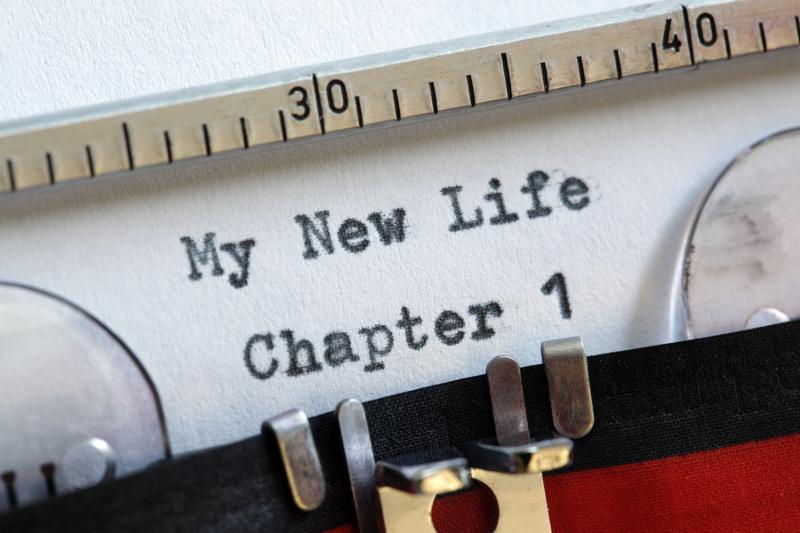 At different times in life, one finds oneself faced with the task of making life-altering changes to pave the way for new possibilities. As an organizer, I have the privilege of being with clients as they journey toward a new life and new possibilities. An inspiring vision is their guiding light and a tool box of new questions is their rudder, navigating them toward their goals and aspirations.
Inspired by speakers Joshua Millbum & Ryan Nicodemus, “The Minimalists”, and Marilee Adams’ book “Change Your Questions, Change Your Life”, I have been exploring the notion that one could change one’s life, its patterns, habits and outcomes simply by changing the questions we ask ourselves. Can it be that simple?
When you think about it, questions illuminate:
Questions shed light on, and offer a deeper understanding of, the choices we make and why. Dr. Adams says, “Our behavior follows our questions” and “new questions shape and direct new behaviors.”
When I began questioning myself about the “stuff” in my life, I noticed there was an innate, underlying meaning I had given to each item that was affecting my decision-making process. During one of my closet purging events, I began to hear the meanings I had assigned each item. Slowing down and listening carefully, I could hear myself arguing for each item and justifying why things should stay, saying:
In other areas of my home and my clients’ homes, I see items being kept for fear that the memory will be lost forever if not saved. Text books, research papers and thesis notes are symbols and trophies of accomplishments and successes representing a former self and held for posterity. Items that have recognized value are held to say something about us even though we don’t like, appreciate or use them.
Why do we give so much meaning to our stuff? Who knows? What I’ve noticed is that when the meaning we give to items remains unexamined and undistinguished, the more likely they are to stay on our shelves versus leave to create space in our lives. Asking rigorous questions and listening intently for the meaning we give to items offer us new interpretations and perspectives, and the freedom to let go.
Questions I like to ask are:
Last week I spoke to someone who was facing a plumbing crisis but needed to declutter large areas before the repair work could be done. Questioning himself, he began to uncover that he was, as he called himself, “Mr. Someday.” Things he acquired and saved were for someday. When he saw something, his question was, “How can I use this, someday?” It’s not such a bad question once in a while, except what he was now facing was all the “someday” projects that never happened and instead were impeding the plumbing repairs. Armed with both a new vision to say goodbye to “Mr. Someday” and new questions to shape his actions moving forward, he was off and running to change his lifestyle and life.
How might life be better if we owned less stuff?
The Minimalists say, “Life can be richer with less stuff.” Dr. Adams’ asks, “What new questions can take us there?”
If letting go to reduce the amount of stuff in your life is your mission and you need help along the way changing your questions to change your life, find an organizer in your area. We would love to support you.
Click on the title above to learn more about the featured author.
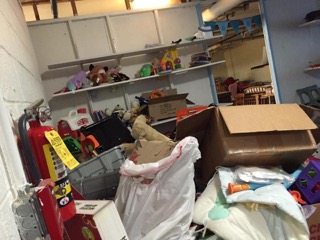 What happens if you love to shop BUT hate to organize? Or you don’t have the time or energy to deal with what you buy?
All those “great deals” become clutter when you bring things into the home and either don’t have a place to put them right away or haven’t purged things to make room for them. What happens most of the time? The items stay hidden in bags that pile up. Then there’s a problem.
Too much stuff, with no place to put it, leads to clutter and chaos which do not allow the stress-free, organized home you desire.
Before you buy something, ask yourself these questions:
Remember—if a deal seems too good to pass up, but you don’t need the item, you need to put it somewhere if you bring it home. The floor does not count so no bags should be piled up on the floor.
Before buying more things, ask yourself the above questions. You’ll learn over time that the best way to stop clutter is before it enters your home.
Click on the title above to learn more about the featured author.
At the end of the school year, there are three things that are a given.
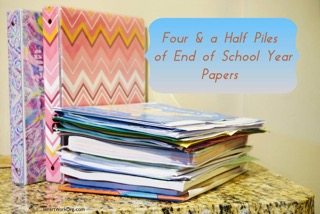
Here’s help for all of those papers:
Just because your kid’s papers come home in one bag doesn’t mean there is just one single type of paper. There are a few different types of papers, and each one needs you to do something different to them. Let’s break it down.
Can you think of any other types of paper that you need to keep?
Don’t bother keeping school papers to pass down to the next kid. When their time comes, their teachers will have their own way of presenting a learning concept.
I recommend keeping recent school directories with #2 above and older school directories in #3 as keepsake items or not at all.
The half-pile I mentioned? I also end up with summer workbooks or skills packets. These might be things you buy or things that the teachers send home. They might include summer reading lists and reading tracking charts. Do yourself the favor of telling your kiddos about them, setting goals, and letting them work through them at a regular pace during the summer. We’ve had a routine of doing a couple of workbook pages each day. This year, we’re giving our kids a weekly packet to complete at their own pace. Either way, I’m grateful for the unused learning resources that the teachers sent home.
How long does it take to get through all the school paperwork? Realistically, it can take less than an hour per kid to sort into these categories and purge. It might take up to another hour to select and digitize the artwork that you’ve saved all year. If it takes much more time, you might be overthinking it. Your child — even elementary school children — can help you with this task. They’ll love telling you about all the amazing stuff they do at school.
If you haven’t unpacked that backpack yet, now is the time to dive in, sort the papers into the categories above, and reclaim your kitchen counter from school papers that have built up all year long.
Click on the title above to learn more about the featured author.
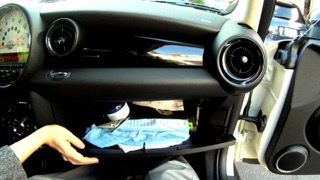 When was the last time you took everything out of the trunk and off of the floor of your car and really explored what is hanging out in there? Maybe you have some store returns to make that happen to be intermixed with fallen French fries, sticky soda bottles and stinky gym shoes…ick. It sounds like a scenario for those Febreze Car Fresheners!
On the next nice day when you can dedicate a few hours, head out to your car and follow these simple steps.
1) Remove EVERYTHING – Yes, I said everything! First, take out the bigger items from the floor and then the stuff from your glove compartment, center console, door pockets and trunk. Don’t forget to look in all those other nifty hidden compartments, as well. For now, keep these items in neat (or as neat as possible) piles in your garage, on the patio or in shopping bags.
2) Clean – Clean your interior windows including the front windshield, the rear window and the gauges. Next, dust and clean your dashboard. Finally, vacuum the floors and seats. If you haven’t done this process in a while, you may just prefer to head to the car wash and let them take care of it for you. A good car wash may be something worthwhile to get rid of that pesky pollen…achoo!
3) Trash/Recycle – Get a trash bag as well as another bag for recycling. Toss any items that are trash, like those fries! Recycle any maps or papers that aren’t needed, like expired car registration or insurance documents, soda cans and water bottles.
4) Sort – Go through the rest of the items and decide where they need to go, whether it is back in the car or into your house.
5) Organize – Keep some fabric storage bins with handles in your trunk and on the backseat. They are inexpensive and can surprisingly hold a lot. Five bins should be enough; you don’t want to fill up your entire car with them.
6) Maintain – Whenever you stop for gas, pop out the trash bag and toss it. Save the recycling items to take home if you don’t see a recycling bin. Keep some additional plastic grocery bags folded flat on the bottom of each bin.
7) Rejoice! – Look inside your newly cleaned car and get ready for those road trips. Then take a whiff. If it still stinks, quickly proceed to the nearest store and buy yourself an air freshener!
Happy travels wherever you are headed, near or far!
Click on the title above to learn more about the featured author.


