Serving Eastern Pennsylvania, Central and Southern New Jersey, and Delaware
Serving Eastern Pennsylvania, Central and Southern New Jersey, and Delaware
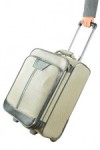 There are a few basic components of your vacation you need to consider before you select certain articles and start to pack. If you are traveling by air, be aware of your carrier’s baggage restrictions. This is the time to be efficient with your space! Below are my 20 tips to help you pack like a pro:
Now zip your suitcase and go! Bon Voyage!
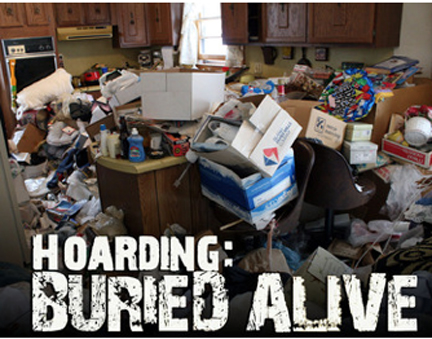
Along with four other Professional Organizers, I had the opportunity to attend a meeting of the Philadelphia Hoarding Task Force and was excited to find out that we are NOT ALONE!
The result of hoarding behaviors touches countless lives. The most obvious is the lives of those with hoarding habits, those who live with them, their children, family members, and close friends. Maybe, less obvious, is the effect of this life style on their surrounding communities. Often times there have been multiple attempts to deal with and support those with hoarding habits resulting in little change and outcomes that don’t last long. Interventions usually focus on having the person divest themselves of things that clutter their living spaces. Frustration, hard feelings are the typical results as little seems to penetrate the multifaceted web of commingled issues, emotions and unrelenting habits that have, more likely than not, spanned the individual’s life time.
This particular and persistent practice of collecting is the manifestation of a complex network of interpretations for the person who engages in hoarding behaviors. For many who are observing these hoarding tendencies, it is virtually impossible to understand, decipher, and make sense of the complexities involved in the condition. Working side by side with clients who engage in hoarding behaviors, I have heard very elaborate and creative explanations for their holding on to what looks like, to anyone else, seemingly useless items. Their ‘need’ to save things is logical in their view, however, the result of their logic is counterproductive to their desire to alleviate their situation that impacts themselves, their loved ones, and in some cases, their community.
Because the result of hoarding behaviors looks like disorganization and clutter, at first glance, it would seem like working with hoarding situations is perfectly suited for the organizing profession. Initially, that was the thinking of the pioneers of our profession until they began to notice that successful organizing methodologies, principles, and products did not seem to work with certain clients. During those early years, organizers tried to impact situations where shower rods became alternate hanging spaces for clothes, dining room tables became storage for piles of papers often flowing over to the accompanying chairs, and beds housed everything else leaving little to no room for the owner. The result, a sub group of NAPO was birthed. Back then it was called NSGCD (The National Study Group on Chronic Disorganization). Today, it is its own independent organization called The Institute for Challenging Disorganization (www.ChallengingDisorganization.org). Their mission is to provide education, research, and strategies to benefit people challenged by chronic disorganization.
Working with these situations for the past 11 years as well as being a member of NAPO and ICD, I have learned that simply talking about the ‘stuff’ with clients is limiting and often times futile. Getting to the reasons and explanations for their need to hold on to items helps to unlock the interpretation that justifies their hoarding behaviors and often times can loosen the grip of their ‘need’ to hold on to things. However, delving into the root cause of these tendencies is outside an organizer’s skill set and training. Teaming up with other professionals such as social workers and therapists, offers more hope for longer-lasting results.
Finding these opportunities to team up with other professionals working with people challenged with chronic disorganization has not been easy until recently when the Greater Philadelphia Chapter of NAPO (NAPO-GPC) was contacted and invited to participate on the Philadelphia Hoarding Task Force. An impressive list of local organizers accepted the invitation, and it was love at first meeting! Finally, we are NOT ALONE in our work with these clients!
Still in its infancy, the mission of the Philadelphia Hoarding Task Force, co-chaired by David Wengert from the Community Legal Services and Katherine Martin, Deputy Policy Director from the Mayor’s office, is to “ensure positive outcomes for those individuals who are impacted by hoarding.” Although the Task Force does not provide direct services, its role is to ensure access to resources, training for provider organizations, and education about hoarding in Greater Philadelphia”. The meeting that I attended with four of my collogues was comprised of representatives from the Philadelphia Police and Fire Department, Licenses & Inspections, Philadelphia Corporation for Aging, and Clutterers Anonymous, to name a few. Each of the representatives brought their unique perspective to the meeting. The shared conclusions was that the work of the Task Force should focus on the individual, not the problem, i.e. the ‘stuff’ and that this perspective should permeate all efforts made by the Task Force, especially in the educational trainings it provides.
A shared understanding of the complexity that leads to hoarding behaviors among the organizations that confront these circumstances, along with sharing resources, expertise, accountabilities, and services, was music to all of our ears!
Finally, we as organizers, can say, we are NOT ALONE in our work with clients who are struggling with habits of hoarding! Collaborating with other professionals helps us offer those challenged by hoarding habits a more holistic service approach, and a hopeful future.
Suggested Resources:
Tulips, lawnmowers, graduations, home sales… these are all signs that spring is here and, with it, new beginnings.
Here in our NAPO-Greater Philadelphia Chapter, we are also looking at new beginnings. May is the month that NAPO starts its new board term. Volunteers who have served the chapter over the past year have either chosen to remain in their positions, continuing to pursue their goals and enhance their knowledge of and through this incredible organization, or to move on to other equally challenging and rewarding positions.
You see, NAPO-GPC is a professional organization comprised of solo entrepreneurs who come together to serve in volunteer positions and create something akin to a very highly efficient corporation. We serve on boards and organize recycling events, we post weekly blogs and maintain a group website, we host quality educational programs and mentor new organizers, we provide speakers for area home shows and volunteers for local charities. We create annual strategic plans and work all year to actually achieve them – and we do! And we do this all for free.
Crazy right? We can’t really have sustainable businesses and still do all of this – can we? Yes, we can. And we do.
Don’t get me wrong; we’re not a bunch of martyrs. There is a method to our madness! “Volunteering” is another way of getting what we want. And, as business-owners, what do we want? – We want to learn new skills specific to our profession. We want to find out about business development techniques & technologies that can help us grow our businesses. We want the time to volunteer in our communities and make a difference. We want networking opportunities that will benefit our careers.
In our businesses, the approximate 80 professional organizers and corporate associate members that make up NAPO-GPC are out there every day in the communities of Greater Philadelphia organizing offices and homes, helping hoarders and families and business men and women to create greater order, peace and prosperity in their lives.
I am very fortunate to be a part of all of this and, as NAPO-GPC President starting my second term, I would like to thank all of the volunteers that make this organization the shining success that it is (from the blog editor who is posting this letter for me to all the members who choose to serve on the Membership, Technology, Marketing or Professional Development teams). Specifically I thank the outgoing board members who have done so much to serve this chapter: Ellen Tozzi, Jackie Mangasarian, Dan Loya, Barbara Siegel and Carla Shipman.
Next, I would like to acknowledge the new Board of Directors that will serve with me and who are already up and running: Vice President, Debbie Lillard; Past-President, Kathy Luskus; Secretary, Naomi Cook; Treasurer, Emily Anderson; Communications & Technology Director, Gabrielle Watters-Smith; Marketing Director, Darla Pompilio; Membership Director, Annie Amoon Richard; and Professional Development Director, Rachel Gambone.
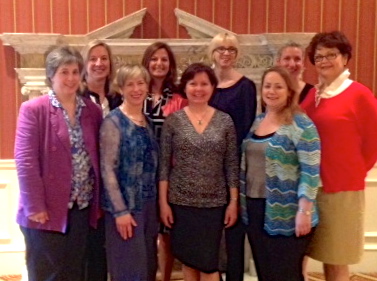
Finally, I am going to take a brazen and shameless moment to claim bragging rights as one of our NAPO-GPC members becomes President-Elect of the National Association of Professional Organizers. Congratulations to our very own Ellen Faye!

I look forward to another year of education, community, achievement and fun with this amazing group of professionals!
 The weather is finally starting to cooperate, and I am in my ‘container garden’ mode- of- thinking. This is the perfect time to talk about outdoor organizing, as I am in the process of gathering all of my gardening essentials (potting soil, pots, gardening gloves, watering can, etc) to plant my flowers.
Whether you live in an apartment, condo, or single family home, you should organize your outdoor items such as your gardening tools, lawn equipment, and/or outside furniture. Sorting like items together allows you to know what you have, which in turn will help you to know what you may need to purchase, as well as to help you find things more easily.
Below are my three Outdoor Organizing Tips:
Take advantage of this glorious weather to plant. Then, all you’ll need to do is to sit back, relax, and enjoy the longer days of summer. Some of the best parts are being able to barbecue and to watch your flowers and plants grow.
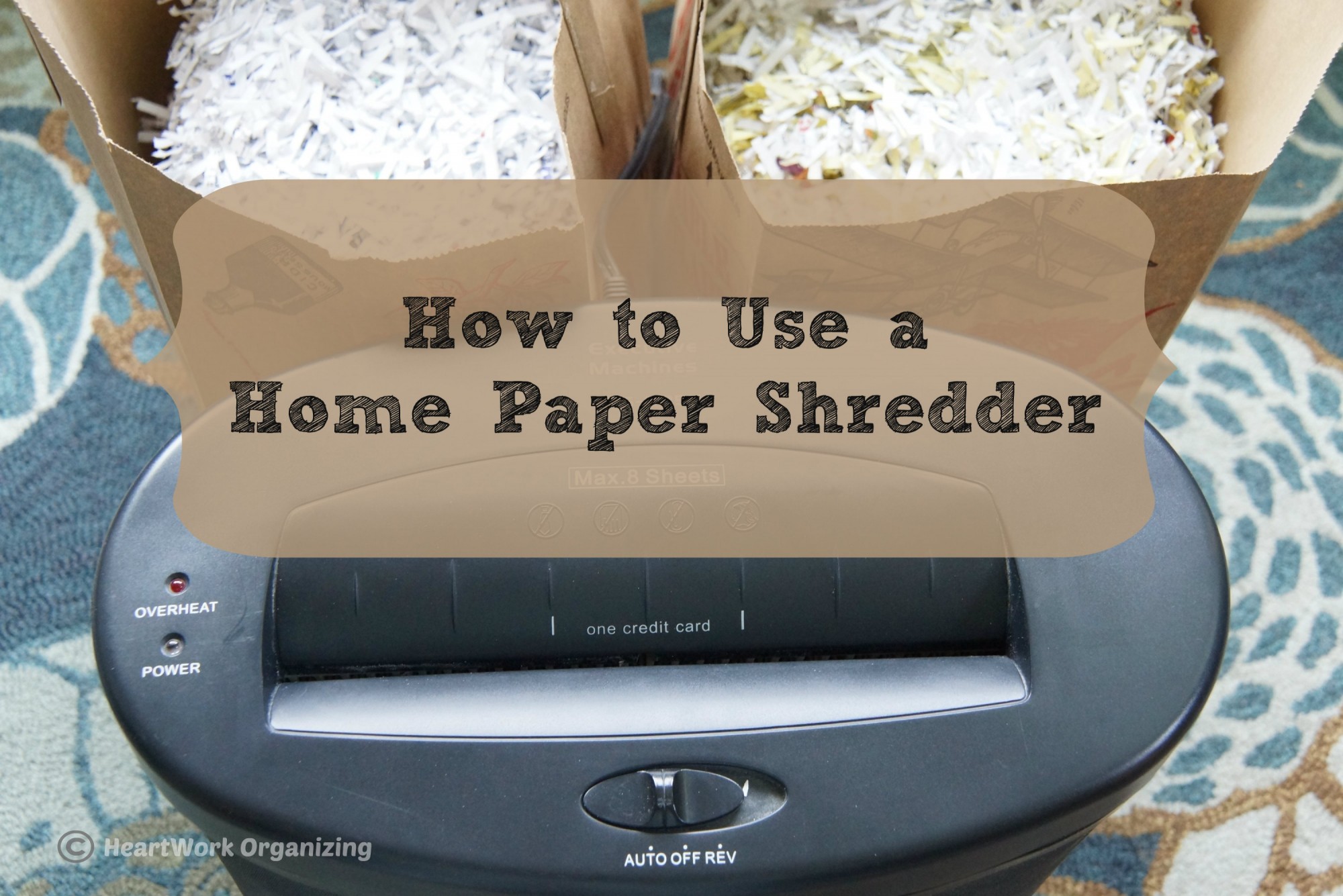
Are you one of the (scientifically identified) 6 million people who avoids shredding your sensitive documents because of your home shredder. 5.9 million of that number have actually burned up at least one home shredder at some point. 5.8 million have burned up more than one. (I might have made those numbers up.) It might be twice that high. Most families should own a cross-cut personal shredder. They are actually very easy to keep in good shape.
Here’s help on how to use your home paper shredder.
If you follow these guidelines, your home shredder should do the job for many years. However, if you regularly have more than 2 shopping bags full of material to shred, you can search for free or low-cost community shredding events in your area. Just Google “shred events” and your city, zip code, or region. You can find a current list of shredding events in the greater Philadelphia region
Here is a list of breitling replica shredding events in the Delaware Valley. If you are planning to attend an event, it’s wise to check the website or to call or e-mail to make sure the event isn’t canceled due to weather or other circumstances.
If you can’t wait for an event, try drop-off shredding services from Staples, Office Depot, Wiggins, or Mail Source (Springfield) for about $1 per pound.
Happy shredding!
Saturday, May 31 10 am – 12 pm Philadelphia
Passyunk Square Civic Association (PSCA)
1400 East Passyunk Avenue & Reed Philadelphia, PA 19147
Friday, June 6 3 pm – 5:30 pm West Chester
West Chester Wiggins Auto Tags
1301 West Chester Pike West Chester, PA 19380
2 paper grocery bags are $10.00
http://www.wigginsshredding.com/residential/tear-fests.php
Saturday, June 21 9 am – 12 pm Glenside Residents Only
Copper Beach Elementary School
825 North Easton Road Glenside, PA 19038
http://www.montcopa.org/DocumentCenter/View/6715
http://www.shredone.com/community-shredding-events
Saturday, June 21 10 am – 12 pm West Chester
West Chester Wiggins Auto Tags
1301 West Chester Pike West Chester, PA 19380
2 paper grocery bags are $10.00
http://www.wigginsshredding.com/residential/tear-fests.php
Saturday, June 28 9 am – 12 pm Doylestown
Doylestown EAC Central Park
Wells Road Doylestown, PA 18901
http://www.titanshredding.com/Community-Shredding-Services.aspx#calendar
Saturday, July 12 9 am – 12 pm Abington Residents only
Abington Township Public Works
2201 Florey Lane Abington, PA 19001
http://www.shredone.com/community-shredding-events


