
Serving Eastern Pennsylvania, Central and Southern New Jersey, and Delaware
Serving Eastern Pennsylvania, Central and Southern New Jersey, and Delaware
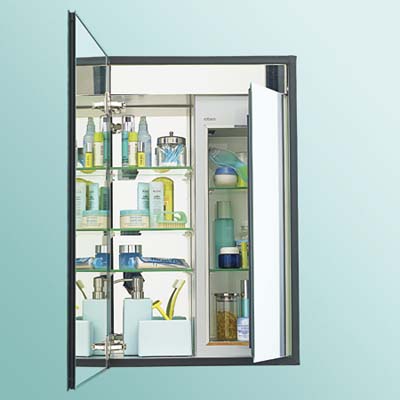 Our new clients often tell us they feel overwhelmed by their clutter and don’t know where to begin. Starting someplace – anyplace – is the best option. Take baby steps and focus on what you’ve accomplished rather than what yet has to be done.
There is no “right place” to start, as we are all different. Select an area that doesn’t intimidate you. Your initial objective is to get the momentum going!
Here are some tips to help you start the process:
Start small – Your medicine cabinet is a great place to begin. Many items have expiration dates so those decisions are easy to make. The space is small, so the project may take only 20 minutes. As an added benefit, if you begin to feel overwhelmed when you tackle other projects, you can go back to the cabinet and re-experience the joy of being organized.
Start with a hotspot – Often, there is an area of your home that drives you crazy. For example, the unopened mail has piled up on the kitchen counter and is sliding toward to stove… or you haven’t seen the top of your dining room table in years, and company is coming. You are highly motivated to get the “monkey off your back” to regain a sense of order. Remove what doesn’t belong in the space and sort similar items together into containers as you go.
Start with what you haven’t used in years – Has your spare room become a dumping ground? This might be an easy place for you to start because you know for a fact that much of the contents hasn’t been used in years… or decades!
Once you’ve made the decision on where to begin, here are some tips to ease the process:
Limit your decluttering time – Don’t bite off more than you can chew in one session. Decision making can be draining, so determine the amount of time that works with your energy – two, three or four hours.
Make appointments with yourself – It’s easy to have good intentions but harder to do the actual work. Dedicate time to declutter by noting it on your calendar. Chances are better that you’ll keep the appointment. How does three hours every other Saturday morning sound to you?
Be kind to yourself – There is often shame associated with clutter. It took you years to accumulate, and it won’t disappear in one session. Don’t judge yourself. Keep your focus on your goal of finding what you need quickly and having a space that is harmonious and energizing.
Let us know how you start – we’d love to hear about it!
Click on the title above to learn more about the featured author.
 Is this the year you’re planning to make your big move? Have you been saving to buy a home? Thinking about retiring and downsizing? Planning on a job change? Want to move closer to the grandkids?
Whatever the reason, there are things you can and should assess and address. One big consideration is the cost. Between packing materials, moving trucks, mileage and manpower, a relocation can run anywhere from 2- to 10-thousand dollars. While some pull it off on a shoestring and others exceed that 10K mark, it is most certainly a costly venture. So what can you do now to identify and avoid unnecessary expenses?
One thing is to take a discriminating look at what, in fact, will have to be moved. This small box of magazines weighs more than 40 lbs! At an average charge of $.50 per pound, that’s $20 (and that’s not even taking into account the labor charge for loading and unloading it). An online subscription to this Backpacker magazine is only $27…for 3 years! Are you sure these magazines, (broken printers, outgrown bikes, etc.) are worth that much to you?
Save your sanity and your budget by lightening your load now. Here are some easy target areas:
Want to know how much you’ve saved by being prepared in advance? Step on the scale with each bag or box you remove and keep track in a notebook or on your cell phone.
Whether you are using a moving company or hauling the load yourself, more stuff means more weight, more time and, bottom line, more money. Since costs incurred in any move include volume, weight and time, the less that is spent on packing and hauling your possessions, the more there will be for other discretionary expenses like unpacking, cleaning, window treatments or furniture updates.
Click on the title above to learn more about the featured author.

January is National Get Organized Month and it’s also the time for making resolutions and promising to follow through on all the advice in the self-help books on your bookshelves. Being the author of a self-help book, I can’t say I don’t recommend them, but striving to constantly improve your life and your home may not be the best advice.
According to Lindsay Myers on brainblogger.com, self-improvement represents a $10 billion per year industry in the U.S. alone. (In addition to high revenues, self-help has a high recidivism rate, which means that those same people already purchased another self-help book in the last 18 months.) Whether we want to lose weight, eat healthy, have a better marriage, or advance in our career, many of us rely on self-help books to improve our lives.
What’s more, home improvement is an almost $300 billion industry, which some say started with Bob Vila on This Old House and cable channels taking over from there with HGTV and DIY Network. I must admit that we bought our old farm house over 30 years ago and we’ve been improving and upgrading ever since.
Stop Improving Yourself and Start Living by Robert Jean Bryant is a classic self-help book that challenges us to end the perpetual quest for improvement and instead upgrade the quality of our daily lives. We are constantly bombarded by commercials and retailers who try to convince us to buy the latest and greatest stuff so we can “improve” our lives. But all that buying means more clutter, distracts us from the real issues and the real people in our lives, and takes us away from living in the moment. Bryant also says that when you get off the treadmill of constant improvement you help yourself to the freedom of creativity, joy and well-being.
I suggest that we start 2016 by getting back to the basics. Let’s break it down:
Finally, answer the question “I wish I had more time to…” and make it happen. As the saying goes, life is not a dress rehearsal.
Clutter Quote: “Know many, trust few, learn to paddle your own canoe.” Anonymous
 It’s a new year. You want to be your best self. Get organized. Lose weight. Exercise. These are some of the most popular resolutions (goals) year after year. Here’s a reality check: They are all great ideas but they are NOT goals.
Why? Because they are too vague. How can you know if you’ve achieved them? What do you want to organize? How much weight do you want to lose? Do what for exercise? What’s the timeframe?
To be successful, remember this SMART acronym when creating goals.
S – Specific: Who, what, when, where, why
M – Measurable: Track progress and outcome
A – Achievable: Able to be accomplished
R – Realistic: Goal and timeframe work for you
T – Time-bound: Timeframe to start and, if applicable, end
Here are examples of SMART goals.
See the difference? On February 1st, if the bedroom is organized, you’ve lost five pounds or you’ve been walking two miles, four times a week, you’ve accomplished your goal! Conversely, if you haven’t met your goal, don’t give up. Just start anew.
Write down your goals. Schedule blocks of time in your calendar to work on them and honor those appointments as you would if they were with someone else. Close your eyes and imagine achieving your goal. Give yourself little rewards along the way.
Most important is motivation. Without it, you’re unlikely to succeed. If you’re not motivated on your own to organize your bedroom and it’s something you really want to do, find a photo of your dream bedroom and post it so you can see it every day. Think about how it would feel to actually live in this room. If you need help, ask a friend, family member, or professional organizer.
Have an organized 2016!

Let me be the first to wish you Happy National Get Organized Month! I saw a sign hanging in Lowe’s that said “Resolve to Declutter” and it was surrounded by a colorful array of storage containers. It’s that time of year when many of us look around our homes and ask “Where did all this stuff come from?” Taking the first step and staying organized can be daunting, but if you think you are alone, you are not. Here are ten barriers that keep my clients from starting and staying organized. Let’s break it down:
If you or someone you love needs help moving forward in the New Year, don’t hesitate to get in touch with a professional: a cleaning service, a senior care agency, financial planner, insurance broker, senior move management company, or a professional organizer. Professionals are trained to listen and narrow in on your specific needs. They can give you a jump start or much needed tools to help you or someone you love live their best life.
Clutter Quote: “As a single footstep will not make a path on the earth, so a single thought will not make a pathway in the mind. To make a deep physical path, we walk again and again. To make a deep mental path, we must think over and over the kind of thoughts we wish to dominate our lives.” Henry David Thoreau
 As we wind down the year, ’tis the season for celebrations. Unfortunately, feeling overwhelmed may be an unwelcome tradition for many of us. Last minute shopping, traffic back-ups, and the rush to decorate can make this time anything but joyous.
There’s a lot to do and think about. But help (SOS) is on its way! By incorporating organizing and productivity solutions, you can focus on what really matters – the joy and merriment of the holidays.
Streamlining and Sourcing-Out are two ways to increase productivity and manage responsibilities, including holiday traditions. Write down the tasks you need and/or want to accomplish and think about ways in which you can make things more efficient and still effective. Consider these potential tasks:
DECORATING
HOSTING
GIFT SHOPPING
Less to think about and do means more time staying in the present. And staying in the present is the best gift you can give yourself.


