
Serving Eastern Pennsylvania, Central and Southern New Jersey, and Delaware
Serving Eastern Pennsylvania, Central and Southern New Jersey, and Delaware
There are a staggering number of people in the U.S. suffering from hoarding behavior. Individuals engage in excessive accumulating or have difficulty letting go of items, sometimes so severe that it interferes with normal activities of daily life. Rooms are no longer usable for their intended purpose, we see dining rooms cluttered with belongings not meals or tubs holding clothes not bathwater. Statistics estimate that 15 million people are dealing with this issue. In Philadelphia, the estimate is 31,000 -77,000.
A cleanout is the method most municipalities use to deal with hoarding. Reducing the volume of clutter to safer levels is thought to alleviate the problem and support the person. The reality is, without treatment and support for the individual, the rate of recidivism after a cleanout is nearly 100%. With the high cost of cleanouts and low rate of return, cities are beginning to pay attention to research findings.
Thanks to the research of doctors Frost, Steketee, Tompkin and Tolin, we are now understanding that cleanouts are “stuff-centered” and don’t address the issues buried below the surface. Simply removing clutter without addressing the underlying issues illuminates the reasons for high recidivism rates after cleanouts. This research is stimulating new intervention models. Being “people-centered” is the common theme. They each involve the person with hoarding behavior as key to the solution. Given that 92% of individuals diagnosed with Hoarding Disorder also have another co-occurring disorder, there is no one set solution.
The work is personalized and takes keen listening skills, creativity, flexibility, patience, and lots of compassion. Instead of focusing solely on the volume of clutter, a spotlight shines on the safety and well-being of the individual while working to reframe old thoughts and beliefs to reduce the dependence on acquiring and saving. There is no magic pill. Everyone involved understands this disorder has deep roots; the process takes time and relapses are as common as seen with over eating or drinking.
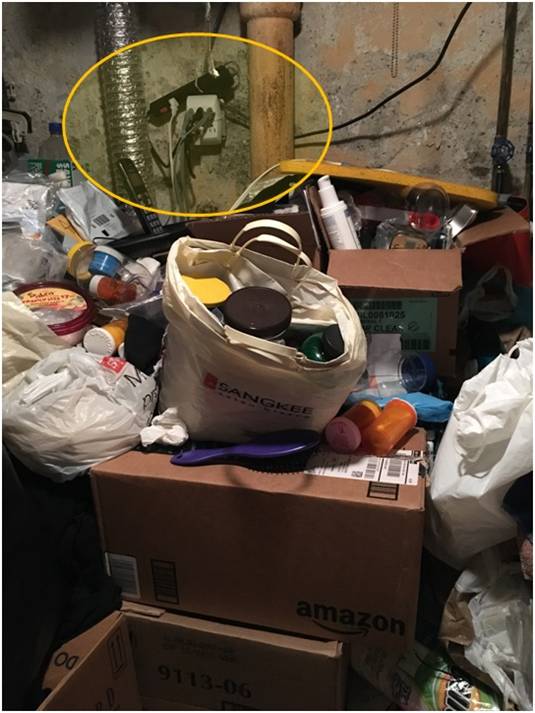
One of the new models is Harm Reduction (HR). Its goal is to reduce the risks associated with hoarding. Instead of talking about the “stuff” to get rid of, it asks the question, “How do we keep you safe in your home and maintain clear access for emergency staff and equipment if the need ever arises?” The (HR) process provides a support person that works with the individual identifying key health and safety concerns in the home. They also serve to document goals to alleviate the issues. From this information, they design and implement a strategy to address these issues over time.
One such organization that has adopted this (HR) model is the Philadelphia Hoarding Task Force (PHTF). The Task Force is a coalition of organizations that seek to improve outcomes for people who hoard while balancing the rights of the individual with the health and safety needs of the community. PHTF is introducing service providers to this model as a way to circumvent the costly and catastrophic consequences often seen with cleanouts and instead, create favorable long lasting results.
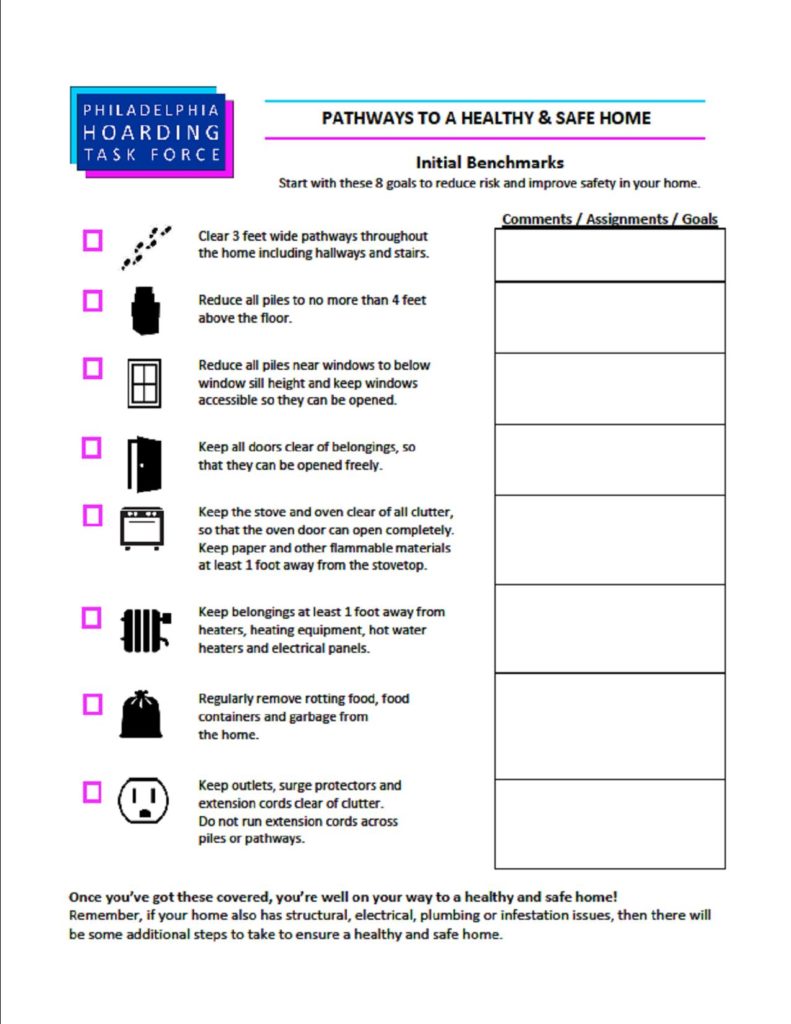
Consulting with its members from Licensing and Inspections and the Fire Department, PHTF has come up with 8 Benchmarks to follow to create healthier, safer homes. These benchmarks provide specific measureable goals that support, guide, and unify everyone involved. They address potential hazards regarding fire, tripping, limited access in or out of the home for the individual, emergency personnel and their equipment, avalanches, health issues and infestation. The benchmarks are as follows:

Next month I’m heading over to the UK for a two-week tour of England where I’ll be staying in a different accommodation almost every night. While super exciting, packing for such a trip can be a nightmare. I don’t need to lug my large suitcase containing everything for my 10 day trip into a hotel where I’m only staying one night. So what to do? Read on to learn how I’ve mastered the art of packing and the dreaded road trip packing!
Okay, so that deals with your regular packing needs. For a road trip where you’ll be staying in multiple hotels you’ll need one large suitcase and one overnight duffle or carry on size case.
It’s hard to think about how to start the downsizing process. There’s so much wrapped up in our treasures: difficult emotions, unmet dreams, things we haven’t finished, bad decisions etc. Change is hard and a next life transition might not always be our choice. Despite all the emotions, it can be a freeing and rewarding experience to let go of those things that fill up our time and space.

In the end, you want to feel good about your decisions and be a part of the process so that you can rest easy into this next chapter.
When I help clients decide what items to cull, I often sing a ditty to the tune of ‘Let It Snow! Let It Snow! Let It Snow!

Oh, the house is getting cluttered
And it makes me want to shudder
And since it’s on overflow
I’ll let it go, let it go, let it go.
Doesn’t sound professional? Well, it helps clients to have fun when making tough decisions about letting go of items that trigger memories. As professional organizers, we help our clients reframe the way they look at their items so they can become clear on what they want to keep and what they want to let go.
Marie Kondo’s books and Tidying Up Netflix series have inspired people to declutter and organize their homes. One of KonMari’s catch phrases is ‘DOES IT SPARK JOY?’ I like that concept because it implies joy ignites energy. Of course, we need to keep items that don’t necessarily spark joy (can you say ‘income tax returns?) so let’s examine some other questions to ask yourself:
Sometimes even these questions aren’t enough to make clear, confident decisions. We may need to delve deeper to examine the ”keep vs. don’t keep” tug of war going on inside us. Here are some other reframing questions to ask yourself:

If when you’re culling items and feel stuck, feel free to sing my take on ‘Let It Go’ or make up your own words to Frozen’s version. Keep the process fun as you strengthen your decision-making and letting-go muscles!
As an auction professional, I regularly have the opportunity to work
with Professional Organizers and Senior Move Managers. These
professionals provide a wonderful service helping client’s de-clutter
their homes for a variety of reasons including preparation for sale,
down-sizing & moving to a smaller living space or simply organizing
their lives.

During the de-cluttering process, there is often a need to sell personal
property and in some cases a great deal of property. Since auctions are
a simple, efficient and often productive approach to selling, we can
often help the same client. This is the wonderful connection between
us.
I developed a passion for auctions as a child from my father. He loved
auctions and would take me on his Saturday auction adventures to
pretend he was helping my mother. He loved to buy at auction and
mom did not appreciate clutter, so you can imagine the action at our
home. These auctions often had big crowds of people and enthusiastic
bidding. It was exciting. I would hear energized bidders looking for a
bargain. However, I was attracted to selling at auction as the price just
went one direction. I have not come across another business
negotiation where the price only goes higher. I loved the excitement of
the auction environment as a child and still do today. However, the
environment has changed.
I have heard these questions in recent years as we help clients looking
to sell their property. A great many of these clients were at auctions
forty, fifty or more years ago buying much of their art, furniture,
antiques, decorative items and collections. They would often spend an
entire day at the auction and there would be hundreds of people in
attendance. They would see friends and enjoy the camaraderie. I was
reminded of the feeling when recently watching an old movie “North
by Northwest”.
There is a fascinating auction scene Alfred Hitchcock
used in the story line. It showed bidding and activity at a high end auction over fifty years ago. The auction gallery was filled. People were sitting in every available seat and others were standing. There were no large screens displaying the auction item. There was no bidding by telephone. There was no internet bidding. There were no computers supporting the auction process at all. What a major difference! Large screens, phone bidding and internet platforms have expanded the range and number of bidders dramatically.
However, it does not look like it to auction buyers from many years ago turned into auction sellers as their lives have changed.
When asked where is everybody? Where are the bidders? I point out
the number of ways the auctioneer is accepting bids beyond those from
the smaller than they expected bidders attending in person. I look
toward the computers handing the bidding for each of the multiple
internet bidding platforms and explain each computer represents far
more bidders than when you purchased in the crowded auctions many
years ago. I look toward the staff members handling phone bidding and
point out those strong bidders as well. There are also bids left with the
office and on our web-site. I explain there is a larger geographic area
represented and there are bidders watching the auction from not only
our region but from the entire United States and around the world. I
point out they have been able to see each item in a gallery of pictures
for a month before the auction.
Once the auctioneer starts taking bids from the bidders in all these
different ways (including from bidders in person like Alfred Hitchcock
portrayed), it begins to make sense. Bidding at auction is even more
exciting as it comes in so many ways from so many places!
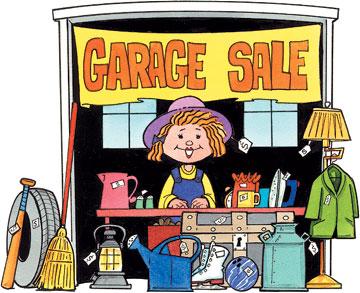
Garages tend to become the dumping ground during the winter. But the best thing about organizing the garage is that if we do a really good job, it usually stays that way for at least a year. In reality, families use garages as storage facilities rather than a place for the car. That stuff can include obsolete electronics, delayed decisions about where to put something, overflow from the house, and unneeded building supplies. Since the whole family probably uses the garage, bring everyone together and make it a family affair. If there is enough clutter to sell, have a garage sale!
Let’s break it down:
Finally, if you enter your home through the garage make sure it’s clutter-free and welcoming. Hang a welcome home sign, clean the door, and put a nice door mat in place.
You deserve a nice welcome home!
Clutter Quote:
“Every time you put something back where it belongs, it’s a gift to yourself.” – Vali Heist


